


Diplomatic Statements and Israeli Strikes
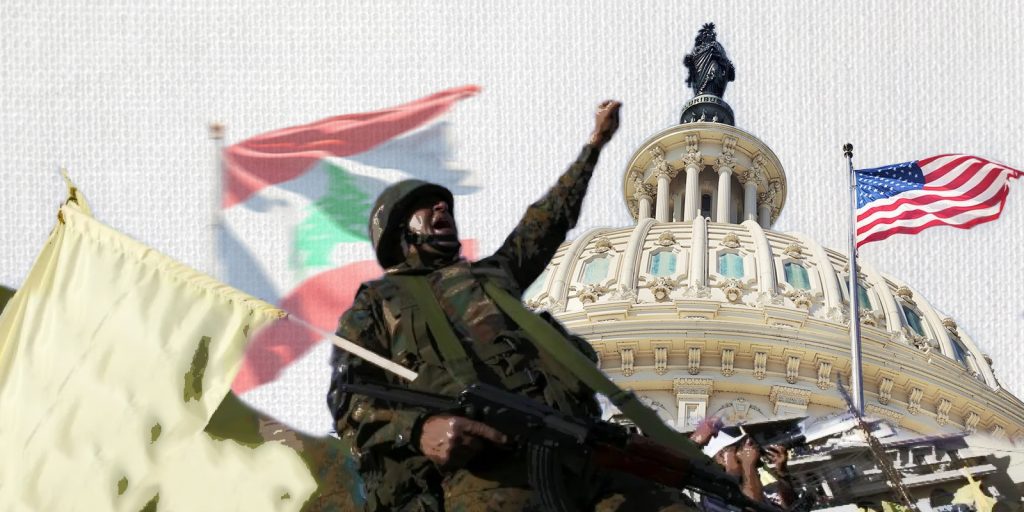
Unless Lebanon takes swift action to resolve the issue of Hezbollah’s weapons, it risks facing a “existential threat” and exclusion from the regional equation, according to U.S. envoy to Syria and Lebanon, Thomas Barrack. But what if Hezbollah refuses to disarm, can the United States overcome that challenge, and at what cost?
Speaking to The National, Barrack described Hezbollah’s military wing as a “terrorist organization capable of causing major instability” and warned that failure to resolve the weapons issue could return Lebanon to the orbit of the historical Bilad Al-Sham (a historical region encompassing modern-day Syria, Lebanon, Jordan, Palestine, and parts of Turkey). He emphasized that fear of civil war remains the primary barrier preventing the Lebanese government from addressing the matter.
In response, Lebanese President Joseph Aoun reaffirmed Beirut’s commitment to ensuring that all arms remain in the hands of the state, adding that the issue must be approached with “caution and responsibility” given its sensitivity and implications for civil peace.
Hezbollah Deputy Secretary-General Naim Qassem responded by stating that the party “will not relinquish its weapons unless Israel fully withdraws from Lebanese territory and halts all forms of aggression.”
These diplomatic exchanges have coincided with intensified Israeli operations inside Lebanese territory. Tel Aviv has confirmed it is conducting special ground operations and has expanded the range of its airstrikes to include northern regions such as Tripoli. Recent airstrikes targeted Hezbollah arms depots in Hermel and the Bekaa Valley.
Read also: Is the Syria–Saudi ‘S–S Equation’ Making a Comeback in Lebanon?
Will Hezbollah Disarm?
Dr. Ali Baydoun, professor of political science and international relations, told +963 that Hezbollah is unlikely to disarm, citing ongoing Israeli threats and the group’s role as a deterrent force. “Hezbollah believes its weapons are essential to defend Lebanon from Israeli aggression and to support the army,” Baydoun said.
He added that the group views disarmament as a direct existential threat to Lebanon’s Shia community: “It would return them to a pre-1982 era of marginalization and exclusion, and potentially open the door for pro-Western, pro-Israeli political forces to dominate Lebanese politics.” Baydoun warned that this could lead to a resurgence of Maronite political dominance, possibly in alliance with Israel.
According to Baydoun, Hezbollah’s stance is clear: the issue of disarmament must be addressed through internal Lebanese dialogue, not external pressure. “This is a matter to be resolved by the president, the government, parliament, and Lebanon’s political leaders,” he said.
Dr. Abdel Moneim Halawa, an expert on Middle East affairs and international crisis management, echoed Baydoun’s view. He noted that even with Western guarantees, Hezbollah is unlikely to surrender its arms, especially while other Lebanese factions and militias remain armed. “The group also remains wary of Israeli strikes targeting its infrastructure,” he said.
Halawa observed that even as Iran reduces its military and financial support and Hezbollah loses strategic depth in Syria, the group is likely to prolong negotiations to extract the best deal possible. “While Hezbollah is aware that Lebanon’s geography is tightly monitored by Israel and the U.S., it continues to rely on its long-standing military infrastructure in the Bekaa Valley and the southern suburbs of Beirut to maintain leverage.”
Despite these limitations, Halawa said the group still seeks to maintain a deterrent posture in Lebanese politics rather than capitulate fully.
Read also: How Do US, Israeli, and Emirati Interests Intersect in Syria and Lebanon?
U.S. Position: Incentives and Pressure
Should Hezbollah persist in refusing to disarm, Halawa believes the U.S. will intensify pressure on the Lebanese government, possibly offering political and economic incentives in exchange for concrete steps. “Washington is unlikely to intervene directly with military force but may lean on Israel or armed groups in Syria, some reportedly trained in Turkey, to exert pressure.”
Halawa pointed to reports of armed factions amassing on the Syrian-Lebanese border, including Uyghur and Central Asian fighters, suggesting a potential shift in regional dynamics.
He warned that Hezbollah’s insistence on retaining its arms could come at a high price, particularly as it loses Iranian support and domestic popularity. “In a changing Middle East, Hezbollah’s dominance is no longer guaranteed. Preserving political relevance might now be more realistic than clinging to military superiority.”
Baydoun, however, suggested the U.S. may employ a broader strategy, including economic pressure, inciting internal unrest, and lobbying for firm governmental decisions against Hezbollah. He noted that the latest American position—delivered via envoy Thomas Barrack, includes a timeline for Lebanon to disarm Hezbollah, possibly by year’s end.
Read also: UAE, Lebanon, and USA: A New Roadmap for Syria and Israel
Disarmament, State Authority, and Reality on the Ground
According to sources close to Parliament Speaker Nabih Berri, Lebanon has received a formal American response to its position paper handed to Barrack. That response reportedly underscores the need for a fixed timetable to integrate Hezbollah’s arms into the state security framework.
Militarily, Baydoun and Halawa agree the U.S. may delegate pressure to Israel, which could escalate targeted strikes and assassinations, adding further strain on the Lebanese government.
Yet Baydoun doubts that Hezbollah is ready to fully disarm. Instead, he envisions a redefinition of the group’s role: “There is openness to restructuring Hezbollah’s military capacity through integration with state institutions or developing a national defence strategy that includes the army, the people, and the resistance.”
President Aoun affirmed that “the decision to centralize arms within the state has been made,” but both analysts agree that the Lebanese army is still too weak to disarm Hezbollah by force.
Halawa concluded that only a coordinated strategy involving Israeli military pressure, American political leverage, and European diplomacy; perhaps led by France, could bring about a resolution or lead to Hezbollah’s integration into state structures.











