


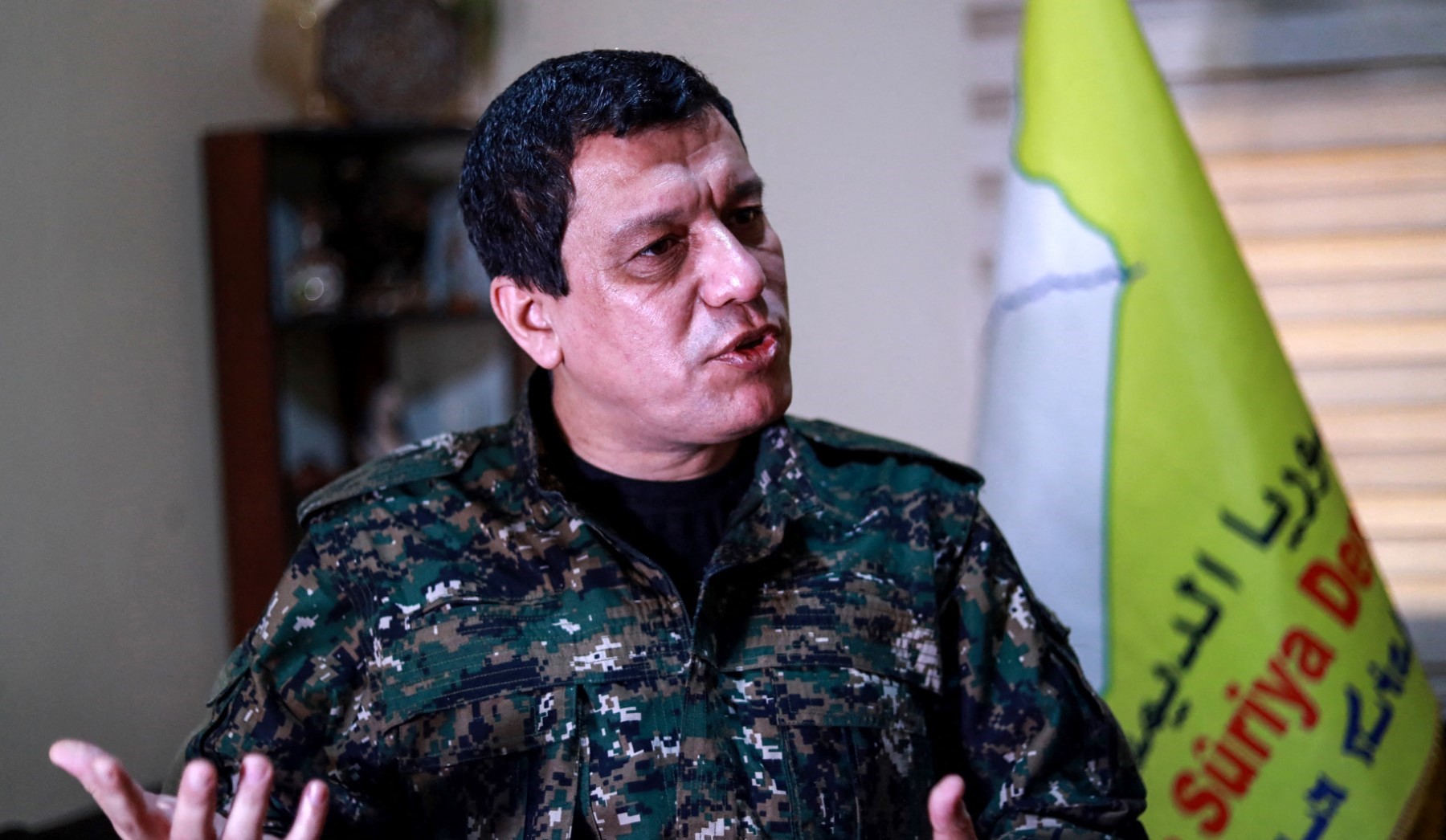
HASAKAH, Syria – General Mazloum Abdi, commander-in-chief of the Syrian Democratic Forces (SDF), said on Friday that the SDF is ready to engage in dialogue with Syria’s transitional government, but only within a framework that ensures political decentralization.
In comments carried by Shams TV, Abdi emphasized that the integration of SDF units into Syrian state institutions must be part of a broader political agreement that secures the rights of diverse communities in northeastern Syria.
“We’re committed to the gains achieved over years of struggle and will not accept any arrangement that resets us to square one,” Abdi said, noting that any military integration process would likely take years.
Related: +963 Exclusive: No Agreement on SDF-Army Merger, Abdi Appointment Denied
He pointed to the Kurdistan Region of Iraq as a viable model for political autonomy and reiterated that the SDF rejects cosmetic or rushed solutions that ignore the fundamental Kurdish issue in Syria.
Abdi also confirmed ongoing coordination with U.S. forces in the fight against terrorism, with new agreements governing American troop deployments in the region. He revealed that future efforts will include direct coordination with the Syrian transitional government on managing Islamic State (ISIS) detention facilities, describing the issue as vital to maintaining shared security.
A delegation representing Kurdish political parties in northeastern Syria is being formed to launch direct negotiations with Damascus, Abdi added, highlighting that Kurdish unity will strengthen their negotiating position.
Asked about Turkey, Abdi said he is open to meeting President Recep Tayyip Erdoğan, noting that recent moves to de-escalate tensions with the Kurdistan Workers’ Party (PKK) had improved SDF’s standing within Syria.
He firmly denied any links between the SDF and Israel, calling the accusations politically motivated attempts by regional powers to discredit the group.
Read also: Syria Moves Toward Stability: Al-Sharaa Agreement with Abdi and the Path Forward
Badran Jia Kurd, a senior adviser to the Autonomous Administration of North and East Syria, echoed Abdi’s remarks in a statement to Agence France-Presse, saying that only a decentralized, pluralistic democratic system can adequately govern Syria’s diverse society.
Jia Kurd argued that Syria’s complex social mosaic cannot be managed through a centralized model that monopolizes authority and ignores local identities and governance. He added that a genuine power-sharing structure between the center and regions is essential for meaningful dialogue.
He confirmed that a committee representing various political parties in northern and eastern Syria will soon travel to Damascus to discuss the Kurdish issue and how to enshrine Kurdish rights in a future Syrian constitution.
“The dialogues between the Autonomous Administration and the Syrian government are ongoing, but the files are extremely difficult and complicated,” Jia Kurd said











