On Monday, April 21, Syrian Interim Government Finance Minister Muhammad Yusr Barniyeh and Central Bank Governor Abdul Qader Husrieh arrived in Washington, D.C., to attend the annual meetings of the World Bank and the International Monetary Fund (IMF).
According to a United Nations official, a roundtable on support for Syria is scheduled to take place on the sidelines of the meetings. The event, hosted by the Saudi government in cooperation with the World Bank, comes amid widespread questions about the implications of this potential support for Syria’s current situation.
Saudi Efforts
Reuters reported last Friday that Abdullah al-Dardari, Assistant Secretary-General of the United Nations Development Program, described the meeting as “a message to the world and to the Syrian people that the largest financial institutions in the world are ready to provide support.”
Al-Dardari noted that Saudi Arabia has paid approximately $15 million in arrears owed by Syria to the World Bank, clearing the way for potential financial grants worth millions of dollars to aid in reconstruction and economic support.
He added, “The Saudi move will allow the World Bank to support Syria through the International Development Association, which is the bank’s arm designated for low-income countries. This is a major achievement for Syria in its negotiations with the World Bank.”
Al-Dardari also pointed out that Syria holds special drawing rights worth $563 million in the IMF. However, accessing these funds requires approval from IMF member states holding at least 85% of the vote share, effectively giving the United States, with its 16.5% share, veto power.
The UN official further stated that the United Nations plans to provide Syria with $1.3 billion in aid over three years to support reconstruction and stimulate the economy. The plan involves more than just financial assistance, it includes a comprehensive strategy for Syria’s economic and social recovery. This strategy encompasses the integration of artificial intelligence technologies, the launch of social protection programs, and the rehabilitation of infrastructure.
Funding for the plan is expected to come from multiple sources, including the World Bank, the IMF, and regional countries such as Saudi Arabia and Turkey.
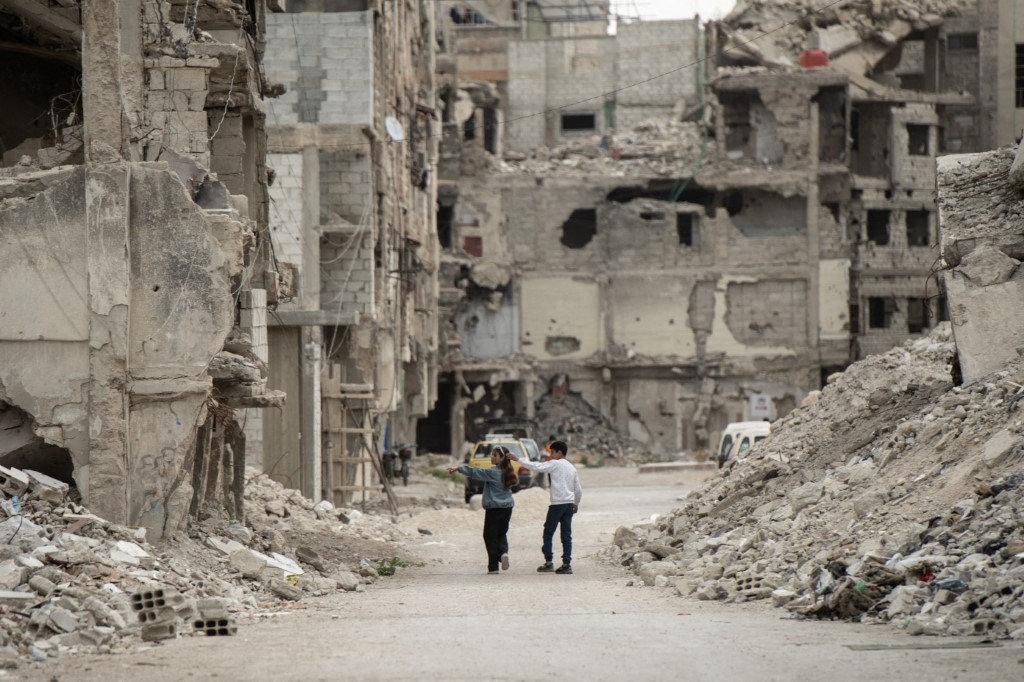
Syrians are hopeful that support from the World Bank and the IMF will help jumpstart long-stalled economic recovery efforts and alleviate the prolonged crisis that has gripped the country for over a decade. Economic experts caution, however, that without the lifting of Western sanctions, which continue to hinder foreign investment, recovery and reconstruction will remain difficult.
Read more: The Food Industry: A Pillar of Syria’s Economy Crippled by War.
Limited Benefit
Syrian economist Dr. Imad al-Din al-Musbeh stated that the potential for Syria to benefit from World Bank and IMF support for economic stimulation and reconstruction remains largely theoretical at this stage. While these institutions can provide financial resources and technical expertise, he said, the existing obstacles appear formidable.
In remarks to the eighth issue of the printed edition of +963, al-Musbeh pointed to challenges including political instability, the lack of broad international recognition of the interim government, and the impact of international sanctions, particularly the U.S.-imposed Caesar Act, which continues to hinder reconstruction efforts. He also cited the typically stringent conditions imposed by these institutions and potential concerns regarding the nature of Syria’s current governance.
Impact of Global Trade Conflicts
Ahmed Haroun, Director of the Centre for Economic Studies and Research in Egypt, emphasised that while Syria has $563 million in the IMF through special drawing rights, access to those funds is restricted due to the influence of the United States, which holds a dominant share in the Fund’s voting system.
Speaking to +963, Haroun said, “Given America’s entry into trade conflicts with many countries, particularly China, it is expected that some states may take positions that diverge from Washington’s preferences. That alone represents a negotiating card.”
Despite the urgent need for financial and technical support, many economic experts warn that support from the World Bank and the IMF carries significant risks and potential negative consequences. These include both economic and political conditions that could exacerbate Syria’s fragile situation.
he World Bank, for instance, often mandates structural reforms as a condition for aid, such as the removal of subsidies on essential goods, measures that typically result in higher food and energy prices and increased pressure on ordinary citizens.
Moreover, such assistance may come with requirements for broad economic reforms like price liberalisation and privatisation, which can lead to higher poverty and unemployment rates. Experts also caution that the aid, primarily extended in the form of loans, could increase Syria’s debt burden while exposing it to external political pressures that may limit the government’s economic and sovereign decision-making.
Read more: Syria Post-Assad: Will the Migratory Capital Come Back?
Dependence on Investments
Ahmed Haroun noted that Syria possesses a diverse economic base, including agriculture, industry, tourism, and natural and marine resources. He emphasised that the key to economic growth and development lies in investment across all sectors. Therefore, he said, the authorities must begin formulating mechanisms to support both local and foreign investment.
Haroun identified the main pillars for attracting investment: supportive and protective legislation, tax and customs exemptions, and development incentives specifically targeted at regions historically excluded from state-backed development programs.
Given the severity of Syria’s economic crisis, which has rendered investments in infrastructure, human capital, technology, and environmental development nearly impossible, and with financing limited to domestic savings and resources, the country faces an uphill battle. Relying on government-funded projects has become increasingly unfeasible under the weight of ongoing sanctions and financial strain. As a result, borrowing from the World Bank has become, according to analysts, one of the few remaining lifelines for Syria.
Dr. Imad al-Din al-Musbeh remarked that the apparent shift in stance by interim government head Ahmed al-Sharaa, who previously rejected the idea of seeking aid from the World Bank, signals a pragmatic shift in addressing the crisis. However, he cautioned that this shift could also spark internal debate and challenges.
Nonetheless, al-Musbeh added, given the current circumstances and obstacles, it remains unlikely that Syria will secure substantial international financial support anytime soon. This reality places a heavy burden on the interim government, which must urgently seek alternative funding sources to meet the country’s pressing needs.
The World Bank’s annual report, issued last December, underscored the mounting risks tied to international debt. It highlighted the depletion of domestic resources for debt servicing as interest rates surged to their highest levels in two decades. According to the report, developing countries spent $1.4 trillion servicing debt, while private-sector creditors withdrew more funding from these nations than they provided, resulting in a net outflow of $141 billion since 2022.