


Hasakah
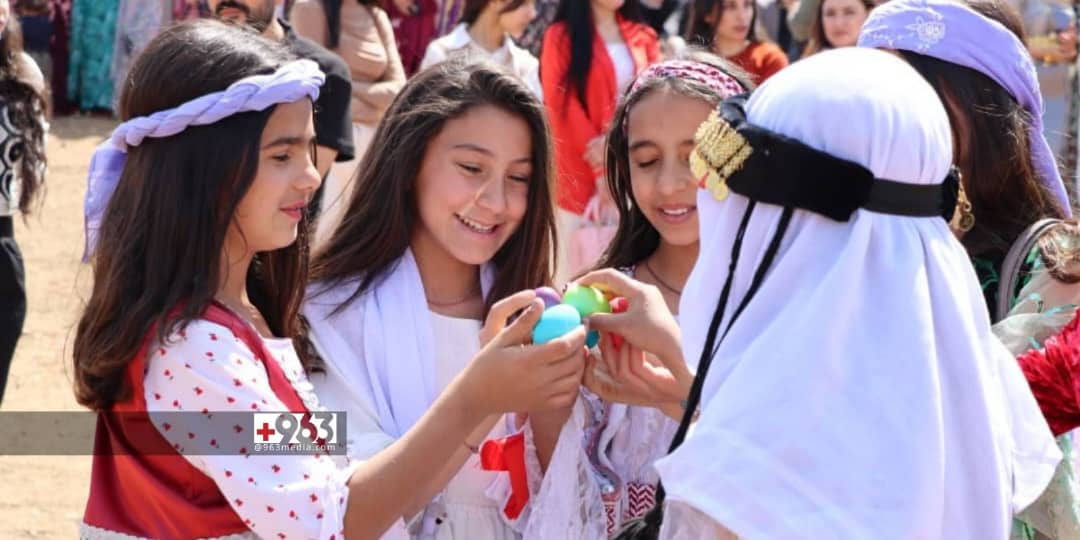
Thousands of Yazidis gathered in northern and eastern Syria on Wednesday, April 16, to celebrate Red Wednesday, the Yazidi New Year and one of the faith’s most sacred holidays. Festivities took place in the village of Duker, in the Amuda countryside north of Hasakah.
The celebrations drew Yazidis who were displaced from towns such as Ras al-Ayn (Sri Kanyi) and Afrin, as well as participants from the region’s broader Kurdish and Arab communities in Syria.
Crowds danced in circles of Dabka, lit candles, and sang religious hymns that have echoed through Yazidi history for centuries. Traditional foods and sweets were shared in a warm, communal atmosphere that reflected a spirit of joy, unity, and resilience.
“This holiday is holy for us,” said Ismael Delph, Joint Chairman of the Yazidi House Council in Syria’s Jazeera province, speaking to +963. “In the past, we were restricted by difficult circumstances. But today, we are celebrating with more freedom, thanks to both moral and material support the Yazidi community has received.”
Colligan Frow, a member of the Yazidi Coordinators’ Federation in Syria who was displaced from Afrin, said: “We endured years of hardship after being forced from our homes, but today we celebrate with hearts full of hope and determination, to protect our religion and our heritage”.
Red Wednesday commemorates what Yazidis believe to be the day the universe was completed and symbolises renewal and rebirth, as it coincides with the arrival of spring. It is a day of spiritual reflection, during which Yazidis visit temples and shrines to pray, repent, and recommit to their faith.
Prior to the Syrian conflict, Yazidis say their celebrations were often limited by state-imposed restrictions on religious expression. In recent years, however, improved security conditions in parts of northeast Syria have allowed for more public and vibrant observances.
Community members say the holiday now serves as a powerful reminder of Yazidi perseverance, cultural survival, and coexistence among Syria’s diverse communities.











