


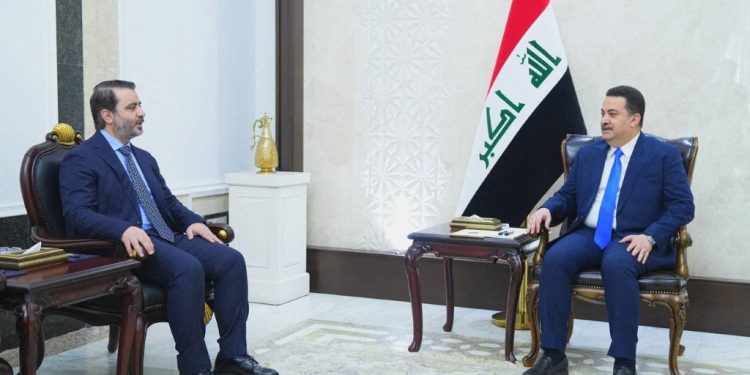
Al-Shibani’s long-delayed visit to Iraq signals a potential shift in bilateral relations, but security concerns and political reservations continue to shape the dynamic between the two nations.
The visit of Assad al-Shibani, Minister of Foreign Affairs of the Syrian Provisional Government, to the Iraqi capital Baghdad in mid-March, and his meeting with Iraqi officials led by Prime Minister Mohammed Shiya al-Sudani, have reignited discussions on the relationship between the two countries following the fall of the ousted regime. The potential for a strategic partnership remains uncertain, particularly given Syria’s reservations about engaging with Iran-backed groups, such as the Popular Mobilization Forces.
According to Syrian sources, al-Shibani’s visit, which had been postponed multiple times for security and other reasons, was seen as a step toward restoring cooperative relations and good neighbourliness between Syria and Iraq.
The discussions focused on key issues such as bilateral cooperation, border security, and counterterrorism, but they did not immediately pave the way for a full normalization of ties.
Iraqi Foreign Minister Fouad Hussein, speaking at a joint press conference with al-Shibani, proposed the establishment of a cooperation council between Baghdad and Damascus. He revealed plans for a joint counter-ISIS operations room, which is expected to be established soon.
Read more: US Policy on Syria: Balancing Political Transition and Sanctions Strategy
Dr. Ahmed al-Qurbi, a researcher at the Syrian Dialogue Centre based in Gaziantep, Turkey, pointed out that the Iraqi government remains cautious in its approach to the new Syrian administration. He suggested that while bilateral relations remain necessary, particularly given Iran’s influence in Iraq, there is little expectation that they will evolve into a deeper strategic alliance.
In statements published in the fourth issue of the printed edition of +963,al-Qurbi emphasized that the Syrian government is prioritizing coordination with Iraq on two key issues: the fight against ISIS and the water resources. However, he noted that broader discussions on economic, tourism, and service-related cooperation are premature at this stage.
Also commenting in the same issue of +963, Iraqi writer and political analyst Ahmed al-Khader stated, “Syria and Iraq can build a new relationship based on mutual interests, particularly in addressing shared challenges in security, economy, and energy.”











